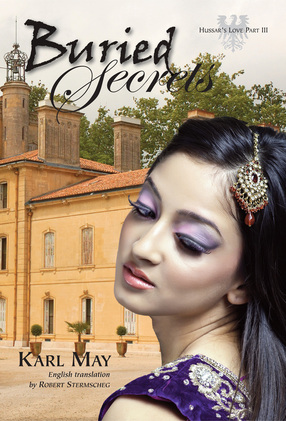
In the spring of 1870, France is preparing for an imminent war with Germany. A French cavalry officer, Bernard de Lemarch, has been given the delicate task of approaching a high-ranking Prussian officer, hoping to glean vital military information. But what he doesn’t know is that the Prussian High Command has been forewarned…. and is expecting him. Posing as a painter, the disguised officer meets up with a bungling landscape painter forming an unlikely friendship, one that unwittingly propels both men headfirst into unexpected danger, while resurrecting a secret from Lemarch’s own past.

Richard von Löwenklau, aided by Franz Schneeberg, finds himself in the heart of enemy territory, tasked with trying to stop the build-up of arms and uncover the establishment of a new para-military presence, the franctireurs... headed up by none other than the irrepressible Captain Albin Richemonte. His task is further complicated by the arrival of a new enemy, Colonel Rallion, who’s bent on supporting Richemonte’s war efforts, while hampering Löwenklau’s plans.

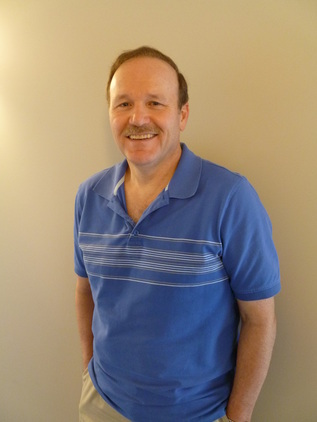
I first met Robert Stermscheg a year ago on the Amazon forums where we chatted about various topics which were related to my debut novel, Ask Me if I'm Happy. Robert shared his review of Ask Me... a short while later. Recently, he contacted me to let me know that his latest work was about to be released, and he happily agreed to do an interview about his work.

This is what he had to say:
Q. I believe this is your third translation project. Can you briefly describe the process of not only translating a work into English, but taking a story written in the 19th century and bringing it to today's reader? 

A: Process is aptly put. First, you need to have an understanding of the time period. In my case, 19th century France and Germany. Second, as a translator, I have to be aware of old expressions that Karl May employed; idioms, as it were, from his time (1880s), that not only stemmed from German tradition and folklore but also presented a challenge in conveying them into modern English. That was perhaps the most difficult. I chose to retain them, as they added ‘colour’, and provided explanation notes at the end.  Also, the German language is structured quite differently from English. Karl May often employed long paragraphs and run-on sentences that had to be broken up and reworked into a more coherent format. That was certainly time consuming.

Q. Why did you choose Karl May as an author to translate and share with North American readers?               

A: Easy. I “grew up” with Karl May. As a boy, I was naturally drawn to his thrilling stories, many taking place in North America, often in the “Wild West”. They depicted the Indian tribes as noble savages, clearly the victims of the “White Man’s” insatiable thirst for land. As much as I enjoyed stories about cowboys and Indians, I also delved into his other works, some of which took place in the old Ottoman Empire, dealing with conflict between the French and the Germans. Although I also read Edgar Rice Burroughs and Sir Arthur Conan Doyle, I seemed to gravitate back to Karl May. I suppose I was attracted to his keen sense of adventure, portrayal of humanity, and his rendering of history through his novels.

Q. Now that you've translated several Karl May books, will you continue with this author or are there other authors that you want to translate?              

A: Actually, I’ve completed three translations, which have been published thus far. The fourth book, POW #74324, is my father’s memoir and deals with his experiences during WWII and then post-war Yugoslavia. I’ve committed myself to doing the Hussar’s Love series, spanning five novels. I may do more in the future, but I also want to expand my writing in other areas, exploring other interests such as historical fiction from the WWII era.

Q. We’ve all fielded unique, if not awkward questions from customers. Can you recall one that stood out? 

A: Sure. One actually dealt with the process of translation. One woman was quite surprised to hear that it took me the better part of nine (9) months to translate my first manuscript of roughly 150,000 words. Looking somewhat sheepish, she had assumed I had used a computer program, like the ones found on Wikipedia. I smiled, explaining that, as a translator, you have to capture the small nuances, the ‘flavor’ of the manuscript and adapt the work to the spirit and flow of the original. No program will do that.

Q. No doubt you've grown a great deal as a writer through this process. Can you share what you've learned, and has this helped you to develop your style and honed your craft?                

A: That is an understatement. If truth be known, I can honestly say that I had no idea what I was getting into (laughs). In my former career as a police officer, I naturally wrote a great deal. However, much of it was very structured and concise, leaving little room to express my thoughts outside the confines of the police report.  The funniest thing about writing, and writing to be published is that everything takes on a new importance. All of a sudden you’re forced to pay attention to previously overlooked things like spelling, syntax, and of course grammar. In short, I took the whole thing more seriously and endeavoured to put out the best effort that I could. Secondly, I started paying a lot more attention to other writers: how they developed their storyline, pacing, character development, even the use of dialogue.  I wasn’t shy about getting advice from other writers, and willingly applied many of their suggestions.  Becoming a writer is the start to the learning process.

Q. Has this experience influenced you to venture away from translation and into writing a novel of a different genre?                 

A: My initial drive was to translate this series so that family and friends could appreciate the works of Karl May. But as so often happens, (perhaps it was just me) we get inundated with all sorts of ideas. I’ve actually had people come up to me at book signings and comment on their bizarre ideas, and one lady in particular told me I needed to, no, I had to, write a certain story (laughs). During the process, I did however have inspiration to write my father’s memoir. He was a WWII veteran, and this was quite the departure from writing fiction. So, yes, it did inspire me to venture into other areas, including writing short stories for magazine publication. I’m currently working on a WWII thriller, entitled Stealth. It deals with an experimental jet fighter the Nazis were developing. The novel delves into human conflict, pitting a few ‘good’ Germans against Hermann Goering’s war machine. It promises intrigue, adventure, even a little romance.

Q. I noticed that you’ve self-published the books in this series. Please share the best and the most challenging parts of that process?            

A: As with many new authors, the challenge is to find a publisher who will take on your project and then walk you through the maze of the publishing industry. What I quickly learned was that few are willing to take on new authors, and fewer still if their initial work exceeds 100,000 words. My first novel (translation) had just over 150,000 words. Further, what complicated my entry into the world of publishing is that my first work was a translation. In my search, I ran into all sorts of vanity presses, that for a high price promised all sorts of things, including marketing, but delivered little in the way of real promotion, and certainly virtually nothing in terms of distribution. For any author, particularly in the early stages, you need to be available for book signings, and that means distribution into book stores. It was a real learning process. My advice to current writers and aspiring authors, is to seek out established authors and ask lots of questions. Also, keep reading (expand your repertoire), and of course continue writing. And perhaps most important, be prepared for the long haul and the many rejection letters (emails) that are sure to come. One of my first highlights was to see my first novel prominently displayed in a local bookstore. The thrill of signing those first few copies was a wonderful experience and made all the work worthwhile.

To see more of Robert's work, click on any of the images below.
To win a copy of Robert's latest ebook, Buried Secrets, just leave a comment below. One lucky commenter will get a free copy!


An Interview with Simon A Forward!

I recently had the chance to chat with Simon A Forward - a talented Sci-Fi writer who has launched a series of books under the heading Evil UnLtd. I've had the pleasure of reading the first installment, The Root of All Evil, already, and I'm looking forward to enjoying part two, From Evil With Love.

So, let's jump right in and get to know Simon!

Let's start with something basic: When did you first start writing Sci-Fi?

Ooh, now let me see. I guess that would be when I was a kid of around seven or eight. With an imagination fuelled by Doctor Who, I was always scribbling away and filling up exercise books with my own tales of monsters and sci-fi adventure. To be fair, the stories probably weren’t great and I almost certainly needed an editor, but the writing bug was there. It was never enough to be a passive consumer of stories, I had to be making up my own.

What drew you to it?


In a word, thefreedomofexplorationandthevarietyandcolourand – okay, maybe I shouldn’t have attempted to answer that in one word. Early on in life, as well as things like Doctor Who and Space:1999 on the TV, there were the sf stories of Captain WE Johns (the man behind Biggles) and Harry Harrison selling me on the genre. Between them that’s a lot of vibrant colours and spaceships and gadgets, tough for an impressionable kid to resist. Plus as a middle child and the only boy in the family, I was something of a solitary youngster (feel free to awww sympathetically here) so probably welcomed the chance to range far beyond the confines of my ordinary bedroom. Later on in life I developed a taste for other forms of literary and cinematic escapism, of course, but as a budding writer at school the grades for my English essays were always accompanied by comments telling me off for continually writing science fiction and would it be too much to ask for me to write something else for a change. I think that’s what finally did it for me – it played to my stubborn, willful streak and I figured why settle for playing in the playground when you could design your own playgrounds.

Aside from your own work, who is/are your favorite writer(s), and do they influence your work in any way?

In sci-fi, people like Larry Niven and Alastair Reynolds. And Douglas Adams. Writers who managed to thoroughly immersed me in their universes. Steering over into fantasy, I love Ray Bradbury and Tanith Lee – no standard sword-and-sorcery-clone-of-the-rings style stuff for me – both of whom have a gift for lyrical prose that probably had a lot to do with beginning my romance with language. So many of the classics, I love – special mentions to George Elliot and Charlotte Bronte. Especially a lot of Russian literature appeals to my darker, more depressive side and my favourite book of all has to be Anna Karenina. No other book has moved me or absorbed me quite to the same extent. (Yet.) And all without the aid of spaceships. Variety is the spice of life, they say, and all of that goes into my brain, bakes at a high temperature for several decades and, I suppose, emerges as a number of different recipes of my own.

One of your first published works was
Drift, a Doctor Who novel. How did that come about?

Drift was one of many book proposals I submitted to BBC Books as they were one of the few publishers (at that or any time!) who had an open door for submissions. Your chances of getting picked off the slush pile were remote, but I wasn’t about to let even the slimmest opportunity to write for Doctor Who pass me by. So I’d submit proposals – sample chapters plus synopsis – on a fairly frequent basis – it wasn’t like I had a shortage of ideas. Eventually, I was offered a short story commission in an anthology and it wasn’t too long afterwards that my idea for a (kind of) ghost story in the snows of a New Hampshire winter won over the range editor, Justin Richards. The idea itself was born in a matter of seconds, while watching the opening scenes of the movie Fargo. A car emerges into view out of a snowy landscape and it hit me, how it’s just as easy to hide something menacing in complete whiteness as it is in total darkness. It was that instant, that simple. I love it when ideas strike so suddenly, fully formed like that.

The phone call from the editor confirming that he liked it was the best moment of my life. During the waiting time, I hadn’t been lazy and I’d gone on to write half the book too, so this made completing it to deadline a good deal easier. At the time I also remember worrying that this might be my first and last published book, so I set out to write it as a proper novel, more than ‘just a Doctor Who book’. I’m not sure how successful I was in that respect, but I’d never been to New Hampshire and people who lived there wrote me and told me how well I’d captured the feel of the place in winter. That’s feedback I treasure to this day.

Why did you start the Evil Unltd series?


Ah, that was all because of Star Trek: The Next Generation. In fairness to the show, I never watched that many episodes. But I found it overwhelmingly dull. All those people boldly going around the universe being terribly nice to everyone and everything. Bound by their prime directive and high moral principles, resolving crises with their own bland blend of pseudoscience and diplomacy. Come on, I thought. How much more interesting would it be if a bunch of self-serving bad guys travelled the galaxy. Similarly to Drift, the idea hit head-on – bam! – like a ship at ramming speed and pretty soon I had my ensemble cast of characters profiled and clearly pictured in my head like a Usual Suspects line-up. That was years ago – 2004, maybe – and the series has evolved from then, but it was the incredible reception the sample chapters got on authonomy that eventually prompted me to publish it independently.

What other books have you written?

In terms of published works, I’ve written other Doctor Who books – a Russian literature-inspired novel, Emotional Chemistry, plus a novella, Shell Shock – and three novelizations for the BBC’s Merlin series.

And a number of other licensed fiction books for kids, albeit under pseudonyms, to which I occasionally own up. They’re okay in their way, I did a professional job on them but they’re developed by committee and I wrote them to pay the rent and that is so far removed from why I write. There are way better works sitting on my hard drive waiting to find a home.

Do you have ideas for works in other genres? Do you think you'll write in those genres?


As much as I love sci-fi, I always wanted a varied writing career – different genres, different media. I’ve written audio dramas for Doctor Who, so that answers the latter to some extent. Still need to write a screenplay at some point, I suppose. As to genres, I’ve always had my fingers in other pies – what can I say, I like pies. I’ve completed a number of other manuscripts, including some that had samples uploaded on authonomy – Kip Doodle was a kids’ fantasy adventure book, my second hit on authonomy. There was Tortenschloss, another fantasy, more in the sword and sorcery vein. And more recently a little something with vampires, but – hand on heart – with a generous splash of originality, a vital ingredient for me if I’m ever going to write anything. Ultimately, what I’d really like to be known for are different series in different genres for different age groups.

What are you working on at the moment?


For the next couple of months I’m juggling two projects – the main one is the first book in a YA) sci-fi series (non-comedy) which had to be put on hold last year. It’s about halfway finished, but the characters and their universe have been neglected for too long. At the same time I’m writing a little each day on Evil 3, just because the ideas are there and wanting out, so I kind of feel the need to keep up the momentum on that.

Aside from writing, what do you do with your day?


It’s true, you can’t write all the time. Well, you can, but the likelihood of churning out drivel increases exponentially I find. So I have to take breathers. Often my breaks end up being writing-related – plotting and scheming and so on. Even if it’s sitting and relaxing and dreaming a little. But I do quite a bit of that on my walks into my favourite café, where I do a lot of my writing. Which is why if you ever see me in the street and get the impression I’m in my own little world, I probably am. Outside of that, I love to read and play music nice and loud, or I might put on a movie and there are a number of TV shows I follow. Also, I am a glutton for certain video games. As a friend of mine put it recently, as a break from work it’s like reversing the polarity. The good ones are inevitably more immersive than a movie and to be honest it’s an industry that seems to be embracing originality and creativity more than the world of books right now. Artists, writers, developers, honestly I’m sometimes in awe of the talent at work there – never mind how much fun the games are.

Anyone familiar with your twitter stream at all knows one fact about you. What is it?

Possibly that I have a cat on my shoulder. Not all the time, you understand, but it’s surprisingly common as one or both of our cats do love to use me as a climbing platform.

Pepsi or Coke?


Coke. If you’ve ever tried to snort a line of Pepsi you’ll know what I’m talking about.

Beatles or Rolling Stones?


A tough one that, since I’m not overly smitten with either. My (older) sister used to play the Beatles a *lot* - too much – in her bedroom across the landing from mine. So much of my young teen life was spent attempting to shut them out. And the Stones, well, I like a few of their tracks but I wouldn’t call myself a fan. That said, I’d never throw them in glass houses.

A wise woman once said: Hips Don't Lie. Do you agree, or do you feel Hips Can Fib (at least on occasion)?

I absolutely agree with everything Shakira says. The unbridled honesty of that woman’s hips makes me weak at the knees. I remember one time my sister asked me a similar question and, slightly under the influence of alcohol, I quipped that her hips didn’t lie, they were just ‘perhaps a little too liberal with the truth.’ Her friends lined up to hit me for that. So all I can say for sure is that no matter how honest or duplicitous a person’s hips, my sense of humour can get me into trouble.

What do you think is the best opening line of a novel ever written?


'It was the best of times, it was the worst of times.
'

There’s a line in the first Evil book that echoes that:

'It was a monstrosity. It was perfect.
'

But foolishly I didn’t put that at the beginning.


I'd like to thank Simon for taking the time to chat with me here at Fourth Person. Obscured. I'm sure the readers will be glad he did, too.


Simon's latest work is the Evil UnLtd series, now available on Amazon worldwide. Many of his Doctor Who projects are also available via Amazon.


An Interview with Author Heikki Hietala

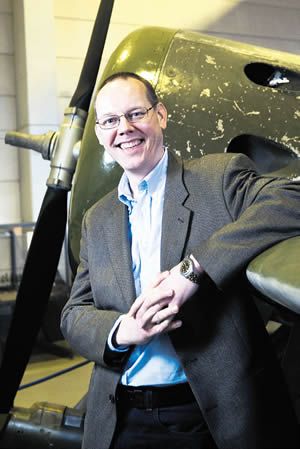
Today it is my pleasure to introduce you to my good friend and fellow writer, Heikki Hietala. Heikki is a Senior Lecturer at HAAGA-HELIA University of Applied Sciences. He holds an M.A. in English Philology from the University of Jyväskylä, Finland, and has worked in IT and localization for more than 20 years.

And, of course, he is a writer, too. With a full-length novel and numerous short stories to his credit, Heikki is no slouch when it comes to producing engaging and emotional work.


I reviewed his novel, Tulagi Hotel here on the blog last year. Have a look and see if it's the sort of thing you think you might enjoy.

And now, without further ado, here's my interview with Heikki Hietala.


First, the obvious question: You're a Finn, writing in English. Does this provide any particular challenges for you? Give us an idea of what those challenges are.

To me the challenge must be sounding real in dialogue. You can work on the descriptive stuff and the storyline quite easily even if you’re not native, but dialogue demands a lot of effort and much listening to natives in movies and on TV.


I also seem to have had a credibility issue – no one took me seriously when I first published Tulagi Hotel, but that looks like it’s been fixed when people read my short stories too. These days I rarely get comments on the language issue.

Prior to this short story collection, you wrote a novel, Tulagi Hotel. Which form do you find more challenging to write – short stories or novels?

That’s hard to say. I started Tulagi as a shot in the dark, not really trying to write a book, but rather to see if I could do it at all. I didn’t pay any attention to form, only function was necessary for me at that stage. I also cheerfully ignored any rules that novel-writing may have, for which I did get some feedback later.

With short stories it is different. Especially in Flash fiction where you only have 500 words to do the situation, persons, plot, and all that; you really need to pay attention to keeping everything down to the absolute minimum. I enjoy that very much, because it adds a level of challenge to the storytelling.

Your narrative style is rather concise – do you think this affects your choice to write more short stories than novels?

I tend to be concise in any case, and I like short stories just as much as I do novels. But the selection between short and long form is unique to writing – if you start building a wardrobe of oak, you usually wind up with a wardrobe, not a desk; but in writing, a story may start off as a novel and get whittled down to a novella or even a long short story.

Do you think writing in Finnish would lead you to writing more expansively?

Not really. I have always admired people who can use few words to say much. In Finnish literature there are many such people, of which little is known globally, but my very favorite author in Finnish is Veikko Huovinen, whose short stories are all-encompassing, compassionate, economical in words, and still very funny. Were I to write in Finnish, I’d pay much attention to this, as it is very easy to ramble on in Finnish and that’s what I totally dislike.

Who (or what) is your favorite character you've written, so far?

That’d have to be Don Wheeler of Tulagi Hotel. He has features of ex-colleagues and some of my friends and I believe I got his character built quite solidly. Don was vital to the book, because Jack is a very timid character and he needed a counterpart who had a certain joie de vivre and a recklessness that Jack could envy.

Some of your readers have suggested that your style of writing is quite nostalgic in tone. Do you agree with that assessment?

Absolutely. I am a member of Year Zero Writers, which is a band of avant-garde authors, and I’ve said my writing is like playing rhythm in their band – I want to be the solid background on which their new-style writing really shines, and I hope to provide a balance that is old-fashioned. I’ve also read a lot of books that are.

Have you found yourself trying to create the same sort of atmosphere in your short stories as you did in Tulagi Hotel? Do you give any thought to that as you write?

Atmosphere depends on the idea of the story, but yes, I do aim for something that is tangible and believable. I think my best efforts in that sense are “The Campsite vol. 1” and “Filtered Light”. Creating an atmosphere is sometimes so easy, and in other stories it takes more effort than the storyline. I work very hard on this, as I myself like to read stories with well-crafted worlds.

Where/When do you do your best writing?

I would like to think the best is yet to come; however, some stories appeared out of nowhere and went from conception to final stage in a day, some (like a Scifi story I am working on now) may take months of see-sawing between “this is how it’ll go” and “no one will believe that for a nanosecond”. The ones that came out clean were usually written just at home, it’s more a question of how complete the story is when I start writing, as I can write in sentence-length snippets if more time is not available at any one time.

Do you plan on writing another novel, or do you think you'll stick to shorter pieces?

I am working on two books, one a mainstream fiction and the other a YA horror story involving 3D design and a haunted hospital. But I also have more than 20K words in shorties that I am working on, so my meager writing time is by default divided between full length and short work. That’s one of the plus sides of writing in my mind, the ability to switch projects merely by switching Word files.

You've created some interesting characters in all of your stories – almost heroic archetypes in some, sensitive everymen in others. How do you go about developing your characters, and how much of yourself do you put into them?

I tend to observe behavior wherever I go, and try to figure out why people act the way they do. They’re the best source of material even if I can’t really know what they are thinking. But when you write almost 200,000 words of what happens to people, you have to use whatever sources are at hand. I’ve also used some of my own features (no, I won’t tell where) and those of my friends, but never to a degree of actually modeling some character on any single person.

Who do you consider your influences in your writing life?

They are many, but let me list Nevil Shute for novel writing, and Roald Dahl, HP Lovecraft, Robert Heinlein, Stanislaw Lem and Arthur C. Clarke for scifi. For my real life and humour attempts, I’d say Veikko Huovinen, the sadly untranslated Finnish master of the form.

What inspired you to write in the first place?

I can’t really say. I just happened to start writing one day and have not looked back - I have got so much out of this rollercoaster ride that I will just keep on working with writing. I am not one of the people who say, “I’ll become an author and I will write a book now” – in fact I do not think you become an author by deciding to become one. You become an author through gradual development and acceptance of your work.

What one lesson have you learned from your experiences in publication that you would like to share with aspiring writers?

That must be the fact that you can only write to please yourself, and any other people that are pleased with your work are a bonus. When you stay true to your own voice, it becomes louder and easier to pick up by readers, and if it doesn’t happen that you land on the bestseller list, at least you did your best and gave yourself a chance to be heard.


I'd like to thank Heikki for taking the time to chat with us about his work, and I'd also like to invite any of you who might be interested to have a look at Heikki's titles, below.


Or, rather, I will - on Blog Talk Radio! This Thursday, February 16th, at 5:00 PM EST (that's 23:00 in Italy, 22:00 in the UK), I'll be interviewed on the Blog Talk Radio network by David Cleinman, for Book Junkies. I invite you to tune in and if you can, why not give us a call so you can ask a question? The number will be (949) 943-1627.
 
 
My newest interview is up on Why Did You Write That? Come over and leave a little comment love, won't you?
 
 
It's two-two-two blogs today! I have an interview up on Author Interrupted with Kai Wilson - come by and share your thoughts on what I had to say, won't you?
 
 
I've got another interview up - this time with the lovely Jess Mountifield on her blog. Won't you come by and share your thoughts on what I've had to say?