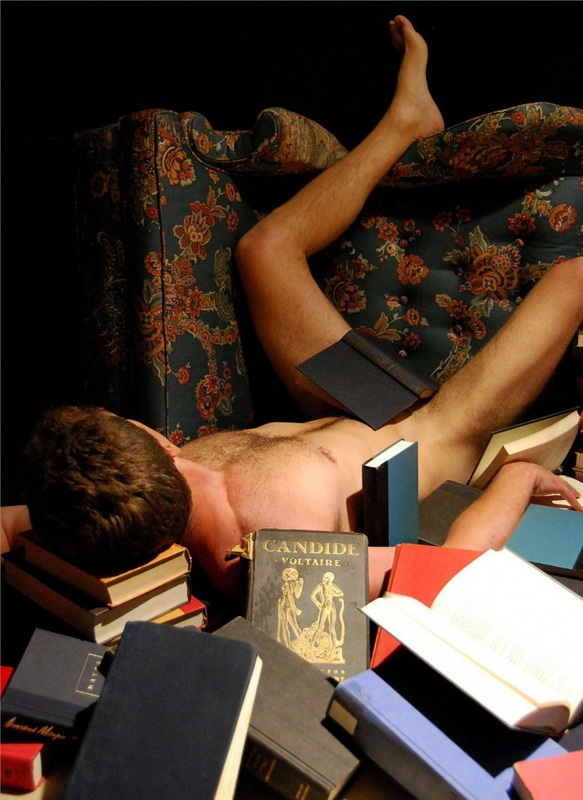
Hello, all! While I'm excitedly making preparations for a visit to the Museo del Ciclismo in Magreglio, Italy, I didn't have a lot of time to prepare a full-bodied Thirteen for today. So I've decided to share a portion of my TBR pile (that's "To Be Read" for those unfamiliar with the term) with all of you, as I've well over the requisite number of books waiting for my attention.
Shameful, I know.
So now, please allow me to present to you:
Thirteen Books (and e-Books) on My 'To Be Read' Pile
1) John Irving: In One Person (Hardcover)
2) Stephen King: The Wind Through the Keyhole (Hardcover)
3) Stephen King: Full Dark, No Stars (Paperback)
4) Matt Shaw: 9 Months - Book One (9 Months Trilogy) (e-book)
5) Tim Krabbe': The Rider (Paperback)
6) Margaret Atwood: The Year of the Flood (Paperback)
7) David Nicholls: One Day (Paperback)
8) Kurt Vonnegut: 2 B R 0 2 B (e-book)
9) Matt Seaton: The Escape Artist (Paperback)
10) Jonathon Budds: Consumed (ebook)
11) Simon A Forward: From Evil With Love (ebook)
12) Graeme Obree: Flying Scotsman (Paperback)
13) Amanda Egan: Diary of a Mummy Misfit (ebook)
And there you have them: Thirteen books which are currently resting atop my TBR pile. Maybe you'll feel compelled to check them out, too, now you've seen them listed here?
At least you'd be reassured of a lovely selection of books for yourself as the autumn nights grow longer and cooler.
You could curl up on the sofa with a cup of cocoa, or coffee, or tea...
And then, you know...
Select a good book and...
Enjoy.
Ciao for now!
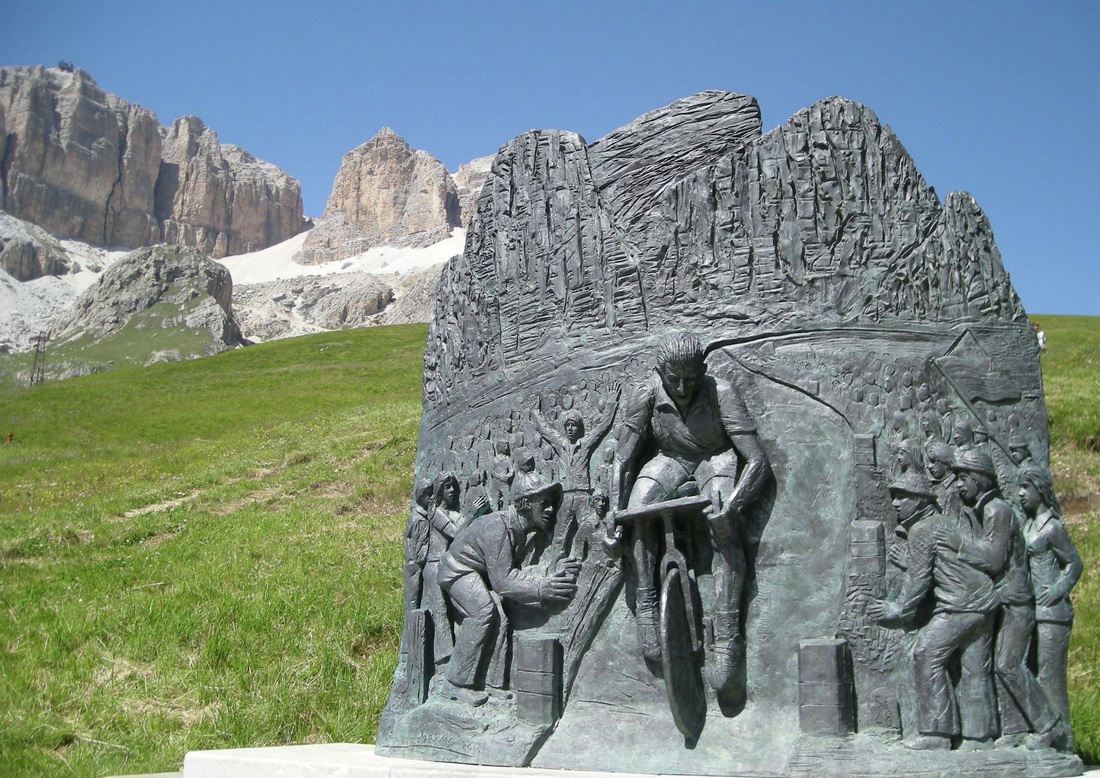
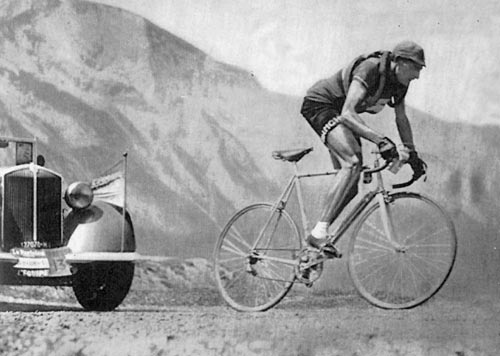
I feel like I'm slowly getting back on track after a very unproductive holiday-filled six weeks. It's been difficult -- much harder than I'd have anticipated, actually. However, I'm determined to get back into the proper headspace for 27 Stages, and I made a little headway last night, thanks in part to a documentary Alle and I watched about Italian cyclist Fausto Coppi. Yesterday was the fifty-first anniversary of Coppi's death from malaria at the age of forty-one, and since Coppi was one of Italy's greatest cyclists, it is not a day likely to pass without commemoration in this country.  Memorial to Coppi at Pordoi Pass, Italy. Just about every fan of cycling is aware of who Coppi is. The son of farmers in the Apennines in Northwest Italy, he rose to the heights of his chosen sport, fought in World War II, then returned to compete and achieve further acclaim as Italy worked to find its footing as a nation once again. Only his affair with a married woman -- while still married himself -- managed to tarnish his reputation in many eyes, and brought him into conflict with the laws of that time.
It's hard for me to imagine, now, that an extramarital affair could be punished by sending the participants to prison. It's hard to imagine how strongly he must have felt for "la dama in bianco" -- "the woman in white", as she was described in the press at the time -- that he would be willing to endure such public outcry (which included being spat on by spectators of the races he rode) and criticism (from no less than the Pope himself).
But he did.
He loved her and gave up his family and a good deal of his popular acclaim in order to be with her. Right or wrong, he followed his heart and did what he thought he had to in order to be with her. They dealt with the consequences, started their family (they had a son in spite of the fact they couldn't legally wed in Italy) and tried to go forward together. In the end, of course, it didn't work out the way they'd planned. Coppi died after contracting malaria during a safari trip in Burkina Faso. (The malady was misdiagnosed as influenza when it emerged after his return to Italy.)
In the last few weeks, I've seen this documentary and I've read William Fotheringham's biography of Coppi. Viewing what Coppi went through makes the prose on the page still more vivid.
After watching the documentary on television yesterday, Coppi has been on my mind even more: what he sacrificed and what he salvaged, who he loved and who he hurt, his own private losses throughout it all (his brother, Serse, who became a cyclist after Fausto did, died after crashing during the final sprint in the Giro del Piemonte in 1951).
And all of this gets turned over and over in my head, tiny elements sticking together and becoming a different whole.
 Coppi in a breakaway. There is a lithograph of this in my living room. I'm thinking a lot about what I've written so far in 27 Stages. Yes, it's fiction, but it's clear to me that the stakes need to be raised, the risks need to be greater than what I've written up to now. I know, if only because the reality is so much greater than anything I could ever invent, I need to do my damnedest to do the stories justice.Because their stories deserve no less.
I've decided to do something a little different this week. If you are a member of Goodreads, it might be worth keeping a copy of this Thursday Thirteen around, as I'm prepping a quiz for that site, based on Ask Me if I'm Happy! (Which, by the way, would make an excellent gift for Christmas, either as a paperback or Kindle e-book...) So when you've read the book, you can have fun answering these questions - and more! - or you can have a go without having read it yet. I promise, there are no spoilers. So, I now present to you:13 Ask Me if I'm Happy Trivia Questions 1) The novel is divided into how many sections?
a) One
b) Three
c) Five
d) Six
2) Davide shares his last name with a famous Italian. Who is it?
a) Bruno Magli
b) Sophia Loren
c) Enzo Ferrari
d) Anna Magnani
3) Emily had a job in Italy. What was it?
a) Singer
b) Bank clerk
c) Teacher
d) Tour guide in Venice
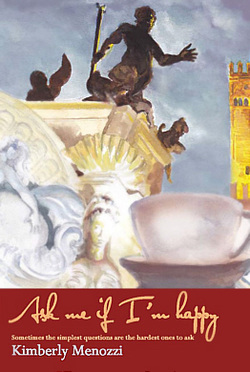
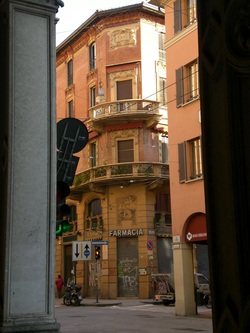
4) There are two statues on the cover, one of which plays a role in the story. Where are the statues found?
a) University of Bologna
b) Piazza Maggiore and Piazza Galvani
c) Piazza San Domenico and Piazza San Francesco
d) Piazza del Nettuno and Parco della Montagnola
5) The title is the translation of which Italian phrase?
a) Chiedimi se sono felice
b) Dimmi un piccolo bugia
c) Dammi un piccolo sorriso
d) Provare il tuo amore
6) Where did Emily and Davide first meet?
a) At the airport
b) On the London Underground
c) In a parking lot
d) On a train
7) Something about Davide's appearance makes Emily smile. What is it?
a) His glasses
b) His scarf
c) His shoes
d) His shirt
8) Why does this make her smile?
a) They're scratched
b) It's unraveling
c) They're scuffed
d) It's dirty
9) Why does Emily go to Rovigo?
a) To meet her ex-husband Jacopo and reconcile
b) For a teaching conference
c) Sightseeing
d) For the sale of her house there
10) Why is Emily in Bologna at the beginning of the book?
a) Italian lessons
b) For the annual book fair
c) She's stranded by a transportation strike
d) She's there to hire a detective to follow her ex-husband
11) What happens when Davide goes to Milano?
a) Trick question – he never goes to Milano
b) He has dinner with Emily and falls asleep on the sofa in her room
c) He stays up all night plotting to seduce Emily
d) He spends a restless night alone thinking about his ex-fiancée
12) Where does Davide live in Bologna?
a) A flat in the city centre
b) In the suburbs
c) A tiny, cramped loft near the university
d) Next to McDonald's
13) What does Emily keep in her planner at the beginning of the novel?
a) A receipt from her first dinner with Jacopo
b) A movie ticket
c) A photo of Jacopo in Rome
d) A phone number on the back of a theatre ticket
How do you think you did? You can check your answers below.
1) The novel is divided into how many sections?
b) Three
2) Davide shares his last name with a famous Italian. Who is it?
d) Anna Magnani
3) Emily had a job in Italy. What was it?
c) Teacher
4) There are two statues on the cover, one of which plays a role in the story. Where are the statues found?
d) Piazza del Nettuno and Parco della Montagnola
5) The title is the translation of which Italian phrase?
a) Chiedimi se sono felice
6) Where did Emily and Davide first meet?
d) On a train
7) Something about Davide's appearance makes Emily smile. What is it?
c) His shoes
8) Why does this make her smile?
c) They're scuffed 9) Why does Emily go to Rovigo?
d) For the sale of her house there
10)Why is Emily in Bologna at the beginning of the book?
c) She's stranded by a transportation strike
11)What happens when Davide goes to Milano?
b) He has dinner with Emily and falls asleep on the sofa in her room
12)Where does Davide live in Bologna?
a) A flat in the city centre
13)What does Emily keep in her planner at the beginning of the novel?
c) A photo of Jacopo in Rome
And there you go - but wait!
There's one more thing!
 You didn't think I'd leave you without a pretty, did you? Ciao for now!
Everyone's source of inspiration is different.
This week, I thought I'd share a little about how "Ask Me if I'm Happy" came about. In some ways, it's just like most people believe it would be:
I got an idea, and I wrote it down. It took two years of writing to get the whole idea down, though. And then it morphed and changed and became something very different from what I'd initially imagined.
It almost always does. Change, I mean.
The origin of the story was this: I watched an episode of Samantha Brown's Passport to Europe which took place in Bologna. There is a segment in that episode where she visits with a Bolognese family for dinner, and while I listened to them talking to her, I felt suddenly homesick. Or more accurately, I felt homesick for my students at the school where I teach. The Bolognese accent is different from a Reggiano accent, but the similarities were strong enough to bring my students to mind.
I continued watching the show, and started pondering what it would be like to have a native Bolognese taking me around the city. I love Bologna, and have loved it since I first visited with my husband several years ago. I go to the bookshops there, I have seen a couple of concerts there, and I just love the general atmosphere of the place.
Anyway, that night, I had a dream which took place in Bologna. It was a dream of the "Watching it on a movie screen" variety, where I was not an active participant, just a viewer. I saw a handsome man meet a plain but pretty woman on a train. I saw the newspaper headlines proclaiming a transportation strike, which kept her in the city. I saw him take her to lunch, and then seduce her, only to find his own personal conflict emerge when she left him. The would-be Casanova was caught in his own trap, and his prey escaped to return to her former life in another place.
The images stayed with me all day long. The sexy, sensual edge of the dream's images wouldn't leave me alone. This was a story I needed to write.
And someday, I might write it, too.
Instead, as I sat down and put pen to paper, the characters made themselves heard. Davide (as he was called) insisted that he wouldn't do such things. He was a nice guy, not a love-em-and-leave-em sort. Emily (as she was always called) said much the same. She was shy, and lacked self-confidence, and no matter how mad she was at her husband she wouldn't just run off for a dalliance with a stranger.
I had to change almost all of the story. I wrote it as a short story - roughly fifteen or twenty pages - called it "Lo Sciopero" (the Strike) and worked on it for the rest of my stay in the States. Now Davide was a gallant stranger offering Emily assistance when her trip to the US was complicated by the strike. He was a perfect gentleman who showed her the tenderness she needed to get past a difficult moment in her life, and nothing more.
But that didn't quite work either. I had to write more. And more.
And more.
The kernel of truth in the first version of the story survived. A friend critiqued it and made a suggestion which pulled the whole thing together. But the short story became a novella, and then the novella grew.
Davide insisted on telling more of the story. "You're not finished yet! What about what happened in Milano? What about when I came home?"
"Yeah!" Emily cried. "What about when I went home? What about the messages we wrote each other? What about...? What about...?"
Fine. I wrote it all down. I finished the tale two years after I started, after changes and rewrites and edits and agonizing hours spent deciding what could be cut, and what I believed needed to stay. And then cutting some of that, anyway.
An entire novella was added, then axed. With more work, I'll probably offer that separately, as a story of its own.
And, yes, there's much more to this process. This is just an overview. No story just "flows" out of a writer - well, maybe for some. Maybe when I've been writing steadily for a couple more years, I'll find the process easier. I doubt it, though. After all is said and done, this is me offering a piece of me to the audience, and that's never an easy thing to do.
But I can't stop doing it.
I hope you don't mind...
|