Ciao a tutti! Hi, everybody! It's time for another Thursday Thirteen, and this week I have a special treat for everyone. You see, back in 2008-9, I had the pleasure of meeting a number of good writers on the Harper-Collins Authonomy website. I read many great books while they were still in their development stage, but there was one book in particular which stood out in my estimation. One, a psychological thriller (which is not a genre I normally read), was so good, I read all of the available sample and asked for more of it. I was generously given the still-incomplete manuscript to read at my leisure. To this day, it is the only book I've managed to read while sitting at my computer.
Well, now, that book - called Affinities - is available for purchase, along with another thriller, Subculture. Both are well worth a read, but you might also want to get to know the author a little better, first.
So please sit back, relax and enjoy this interview with the lovely and talented (and former Authonomite), Chris Hollis!
Well, now, that book - called Affinities - is available for purchase, along with another thriller, Subculture. Both are well worth a read, but you might also want to get to know the author a little better, first.
So please sit back, relax and enjoy this interview with the lovely and talented (and former Authonomite), Chris Hollis!
Thirteen Questions for Chris Hollis, Author

1) So, Chris - tell me something about yourself.
Well, I’m a mid-thirties writer, fighting off life while I try to make my mark. Writing is the one job in entertainment where you can still be considered at the start of your career in your thirties. Many of the greats didn’t reach their stride until their kids were all grown up (not that I have any).
2) When did you first get bitten by the writing bug?
That’s not so easy to pin down. Winding back the clock, I was originally an aspiring (failed) cartoonist, then a director-without-a-camera, which turned into a screenwriter. Book writing evolved some point in my early twenties. I dabble. It’s always been one of my problems – disciplined, but rarely focussed.
Well, I’m a mid-thirties writer, fighting off life while I try to make my mark. Writing is the one job in entertainment where you can still be considered at the start of your career in your thirties. Many of the greats didn’t reach their stride until their kids were all grown up (not that I have any).
2) When did you first get bitten by the writing bug?
That’s not so easy to pin down. Winding back the clock, I was originally an aspiring (failed) cartoonist, then a director-without-a-camera, which turned into a screenwriter. Book writing evolved some point in my early twenties. I dabble. It’s always been one of my problems – disciplined, but rarely focussed.
3) Tell me about your books.
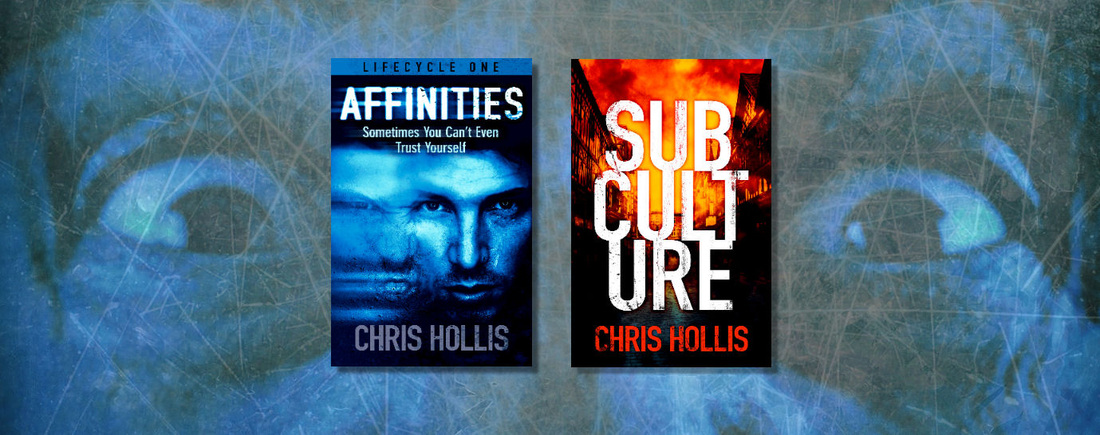
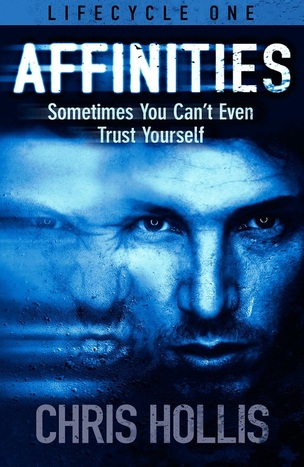
I have two available as of 2013 – Subculture and Affinities. Both are thrillers, and fast, but the similarity ends there. Subculture is an action-packed, breakneck, A-to-B kind of affair, whereas Affinities is a good deal more complex. Even I can’t remember all the different threads I wove into it. Every inanimate object has a specific pathway through the novel, developing in the reader’s eye, something like a character.
4) Which book was the greater challenge to write?
Easily Affinities. That kind of detail takes time to get right. After six years of putting it together, I just wanted to write a nice linear plot, something you could read on a sun lounger in a couple of days. That’s Subculture. Still, both are child’s play compared to a couple I have on my desktop. Ten years hasn’t been enough to call them finished...
5) How much research do you do when you're writing?
Copious and endless. Google images helps me to write descriptions, then I look up sunset times, weather forecasts, road names, people names. You can’t afford not to research every last little detail. It also helps to write Q&As as you go along, to remind yourself what the overriding point of the novel is. Then you can research your own research!
6) What genre do you prefer to read? What are your favorite books in that genre?
I’m into soft sci-fi and paranormal. Different genres, but they boil down to the same thing – an ordinary protagonist versus a strange adversary. Giant monsters and spooks. Think Triffids, Martians, vampires in a 1990s sense. Vampires are a bit different now, I feel. Less edgy, less fun.
I have two available as of 2013 – Subculture and Affinities. Both are thrillers, and fast, but the similarity ends there. Subculture is an action-packed, breakneck, A-to-B kind of affair, whereas Affinities is a good deal more complex. Even I can’t remember all the different threads I wove into it. Every inanimate object has a specific pathway through the novel, developing in the reader’s eye, something like a character.
4) Which book was the greater challenge to write?
Easily Affinities. That kind of detail takes time to get right. After six years of putting it together, I just wanted to write a nice linear plot, something you could read on a sun lounger in a couple of days. That’s Subculture. Still, both are child’s play compared to a couple I have on my desktop. Ten years hasn’t been enough to call them finished...
5) How much research do you do when you're writing?
Copious and endless. Google images helps me to write descriptions, then I look up sunset times, weather forecasts, road names, people names. You can’t afford not to research every last little detail. It also helps to write Q&As as you go along, to remind yourself what the overriding point of the novel is. Then you can research your own research!
6) What genre do you prefer to read? What are your favorite books in that genre?
I’m into soft sci-fi and paranormal. Different genres, but they boil down to the same thing – an ordinary protagonist versus a strange adversary. Giant monsters and spooks. Think Triffids, Martians, vampires in a 1990s sense. Vampires are a bit different now, I feel. Less edgy, less fun.
You can’t afford not to research every last little detail.
7) What made you decide to be an Indie author?
I would have baulked at the concept ten years ago, determined to follow in the footsteps of the people who inspired me. Then one day I realised it should be the readers who decide what they like, and nobody else. So now I’m out there, along with two billion other authors, walking the fine line between shameless self-promotion, and blindly hoping to get noticed.
8) When you're writing, do you need noise or silence?
Great question. Silence, and it’s a bone of contention. When I’m doing a first draft, ambient noise is acceptable, but when it comes to doing that perfect paragraph – I mean the one where every word just flows poetically – it has to be silent like the grave for miles around. Hence why my output isn’t higher. One book a year is hard enough as it is when you struggle to concentrate like I do.
9) What's your typical writing day like?
Few and far between, really. Sometimes, I stay late in the office and pace up and down, proof reading, lapping up the solitude. But those rare pajama days amount to maybe seven hours of writing, and five of procrastination. They’re fantastic for getting the house clean!
10) Where did the ideas for your books come from/what inspired them?
Someone once said to me “think of a terrorist”, and I had the image I think most people would – a Middle-Eastern bearded man, with a vendetta that many Westerners perhaps wouldn’t understand. I didn’t like the stereotype, and so I decided to make terrorists who were homegrown, but still organised en-masse. The other ground, I felt, had been over trodden. [note: that book became Subculture]
Affinities, at conception, was a one-man play. Every chapter was supposed be a different night in the same location, with just one character. Turns out that would be boring as hell, so I scrapped the idea as I learned how much a story needs both dialogue, and autonomy. You can still see the roots in the first five chapters, though.
I would have baulked at the concept ten years ago, determined to follow in the footsteps of the people who inspired me. Then one day I realised it should be the readers who decide what they like, and nobody else. So now I’m out there, along with two billion other authors, walking the fine line between shameless self-promotion, and blindly hoping to get noticed.
8) When you're writing, do you need noise or silence?
Great question. Silence, and it’s a bone of contention. When I’m doing a first draft, ambient noise is acceptable, but when it comes to doing that perfect paragraph – I mean the one where every word just flows poetically – it has to be silent like the grave for miles around. Hence why my output isn’t higher. One book a year is hard enough as it is when you struggle to concentrate like I do.
9) What's your typical writing day like?
Few and far between, really. Sometimes, I stay late in the office and pace up and down, proof reading, lapping up the solitude. But those rare pajama days amount to maybe seven hours of writing, and five of procrastination. They’re fantastic for getting the house clean!
10) Where did the ideas for your books come from/what inspired them?
Someone once said to me “think of a terrorist”, and I had the image I think most people would – a Middle-Eastern bearded man, with a vendetta that many Westerners perhaps wouldn’t understand. I didn’t like the stereotype, and so I decided to make terrorists who were homegrown, but still organised en-masse. The other ground, I felt, had been over trodden. [note: that book became Subculture]
Affinities, at conception, was a one-man play. Every chapter was supposed be a different night in the same location, with just one character. Turns out that would be boring as hell, so I scrapped the idea as I learned how much a story needs both dialogue, and autonomy. You can still see the roots in the first five chapters, though.
11) Say your books take off and you start earning Stephen King money: What is the first thing you purchase?
Remember the speedboat David Beckham rode along the Thames, holding the Olympic torch? I heard they couldn’t sell it. I’d have that. There were lights shining into the water jets that made it look all futuristic.
12) Give me a completely random fact about yourself.
I was the one who left the office window open overnight. Feels good to clear the air.
13) Any final words of advice or declarations to make?
It seems to me that every writer around is part of a gold rush for the ebook market right now, with many struggling to get as many books out there as quickly as they can. My advice is relax. Better to have three great books than six that are merely okay, right? You’ll be tagged with those books for the rest of your life (and then beyond). The other tip is go sit in a sauna. Quiet thinking time, and also nice and warm.
Remember the speedboat David Beckham rode along the Thames, holding the Olympic torch? I heard they couldn’t sell it. I’d have that. There were lights shining into the water jets that made it look all futuristic.
12) Give me a completely random fact about yourself.
I was the one who left the office window open overnight. Feels good to clear the air.
13) Any final words of advice or declarations to make?
It seems to me that every writer around is part of a gold rush for the ebook market right now, with many struggling to get as many books out there as quickly as they can. My advice is relax. Better to have three great books than six that are merely okay, right? You’ll be tagged with those books for the rest of your life (and then beyond). The other tip is go sit in a sauna. Quiet thinking time, and also nice and warm.
And there you have them, Thirteen Questions for Chris Hollis, Author!
I hope you've enjoyed getting to know him, today. If you're intrigued and would like to learn more about Chris, you can visit his website.
His books are available on Amazon US and UK, in both paperback and ebook.
Affinities (US ebook)
Affinities (UK ebook)
Subculture (US ebook)
Subculture (UK ebook)
I hope you've enjoyed getting to know him, today. If you're intrigued and would like to learn more about Chris, you can visit his website.
His books are available on Amazon US and UK, in both paperback and ebook.
Affinities (US ebook)
Affinities (UK ebook)
Subculture (US ebook)
Subculture (UK ebook)
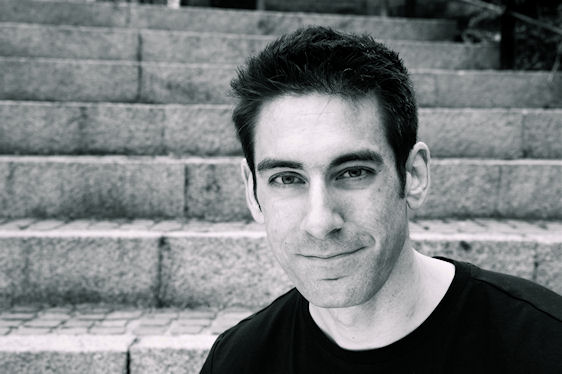
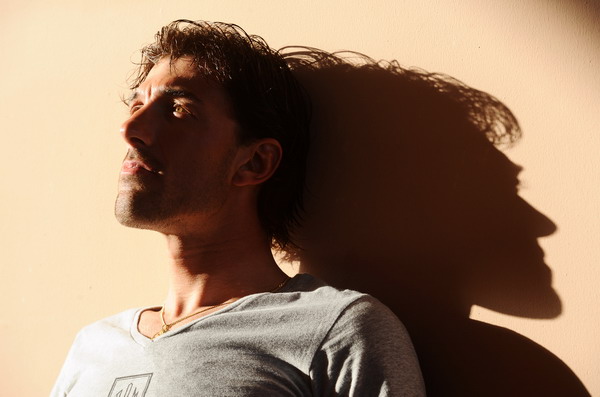
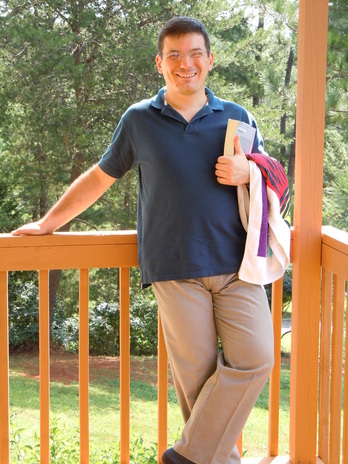
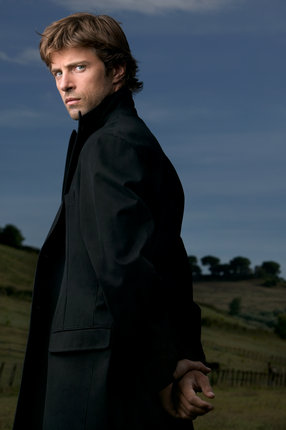
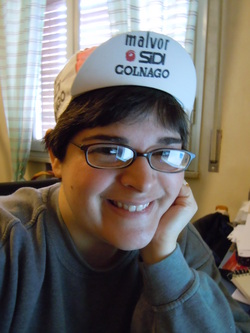
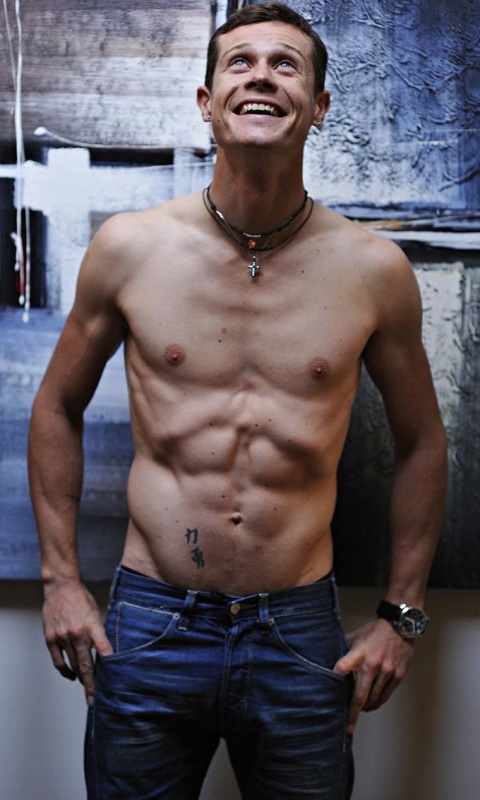
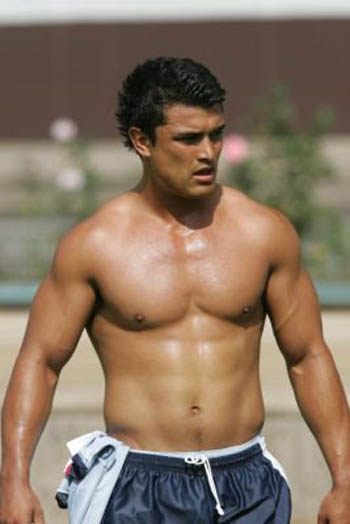
No eye candy today (well, unless you count Chris himself) but drop by tomorrow for a tasty treat!
Ciao for now!


























 RSS Feed
